Is your paper shredder making grinding noises or struggling to pull in paper? These are classic signs it needs lubrication. Without regular oiling, paper dust builds up between the cutting blades, increasing friction and putting extra strain on the motor. This leads to jams, overheating, and eventually permanent damage. The good news: oiling your shredder takes just a few minutes and is one of the most effective ways to extend its life.
This guide walks you through exactly how to oil a paper shredder using the right oils, proven methods for all shredder types, and maintenance schedules that keep your machine running smoothly for years.
Choose the Right Lubricant for Your Shredder
Using the correct oil is critical. The wrong type can damage internal components, create fire hazards, or void your warranty.
Safe Oils for Shredders
Stick to lubricants specifically designed for precision metal parts. These are clean, non-tacky, and thin enough to penetrate tight blade gaps:
- Dedicated shredder oil formulated for paper-cutting mechanisms
- Mineral oil that is chemically stable and spreads evenly
- Sewing machine oil widely recommended for metal gears
- 3-in-1 oil as a common household option
- Hair clipper oil designed for high-speed metal blades
- Bar and chain oil as a thin backup option
Never Use These Substances
Avoid household products that seem similar but cause long-term harm:
- WD-40 or RP7 are degreasers, not lubricants, that leave sticky residue
- Cooking oils like vegetable or olive oil oxidize and turn gummy
- Aerosol sprays pose fire risks near motor components
- Grease or heavy petroleum lubes are too thick and trap dust
Oil Your Shredder on the Right Schedule
How often you oil depends on usage, model type, and material volume.
General Oiling Intervals
- Light home office use: every 2 months or each time the bin is emptied
- Regular office use: after every bin emptying or weekly
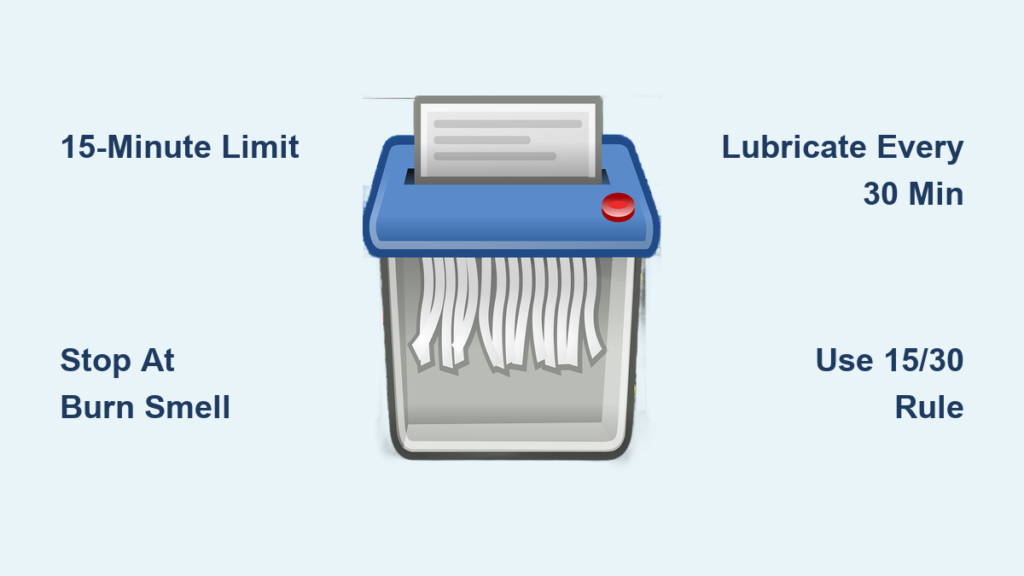
- Heavy-duty continuous use: every 10 to 15 minutes of shredding
Model-Specific Needs
- Cross-cut shredders require oiling after every bin empty
- High-security models need oiling every 15 minutes of operation
- Heavy-duty industrial units need constant lubrication during bulk jobs
Signs You Need to Oil Now
Oil immediately if you notice slower paper feed, unusual grinding noises, frequent jams, motor hesitation, or sensor malfunctions. These symptoms mean friction has already built up.
Apply Oil Using the Paper Method
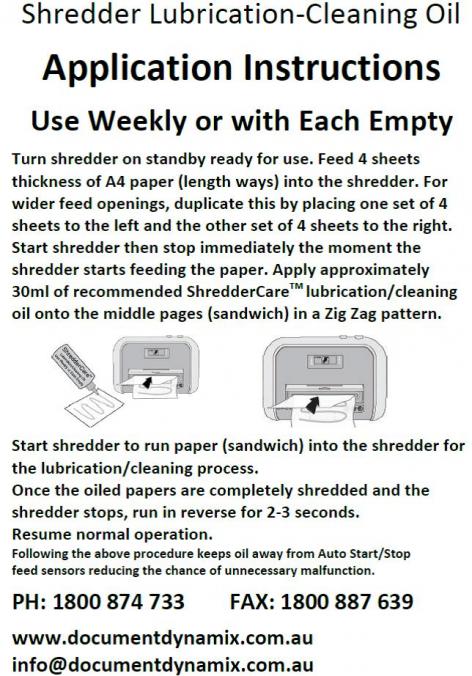
This recommended method uses paper to safely carry oil into the cutting head, minimizing mess and protecting electronics.
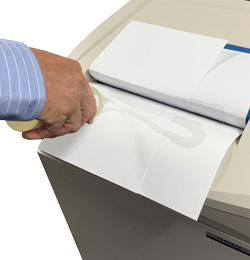
Apply Oil to Paper
- Lay a standard sheet of paper flat
- Squeeze 30ml of shredder oil or 3 to 5 drops of mineral oil in a zig-zag pattern across the width
- For wide feed openings, prepare two sets of four oiled sheets, one for each side
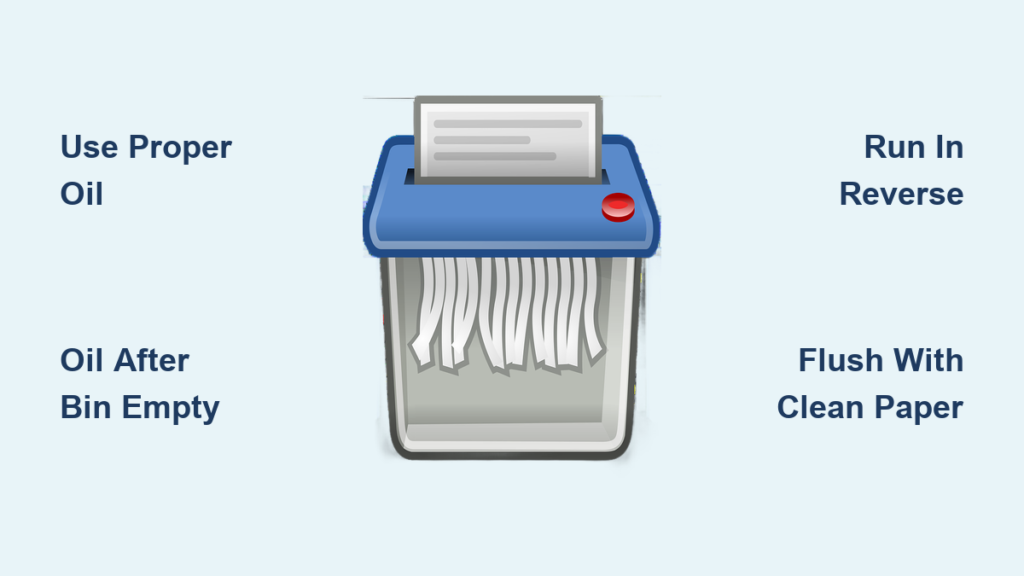
Run in Reverse Mode
- Turn the shredder on or set to standby
- Feed the oiled sheet into the slot
- Switch to reverse mode immediately
- Let it run for 1 full minute, adding 2 to 3 blank sheets if the paper shreds early
Flush with Clean Sheets
After oiling, run 2 to 3 dry blank sheets through in forward mode to absorb excess oil and prevent dripping onto future documents.
Apply Oil Directly for Accessible Models
Only use this method if your shredder allows safe access to the cutting head.
Apply Drops to Feed Slot
- Ensure the shredder is powered on or in standby
- Place 2 to 3 drops of oil directly into the paper feed, targeting the center of the cutting head
- Allow the oil to settle for a few minutes before resuming use
Use the Reverse Button Method
- Press and hold the reverse button
- While holding, slowly squeeze oil across the feed opening
- Continue holding reverse for 10 seconds after application to spread oil evenly
Auto-Distribution Option
- Hold the forward button and apply oil
- Release forward, then press auto-on to start the motor
- Shred one test sheet, then hold reverse for 2 to 3 seconds to finalize distribution
Use Pre-Oiled Shredder Sheets
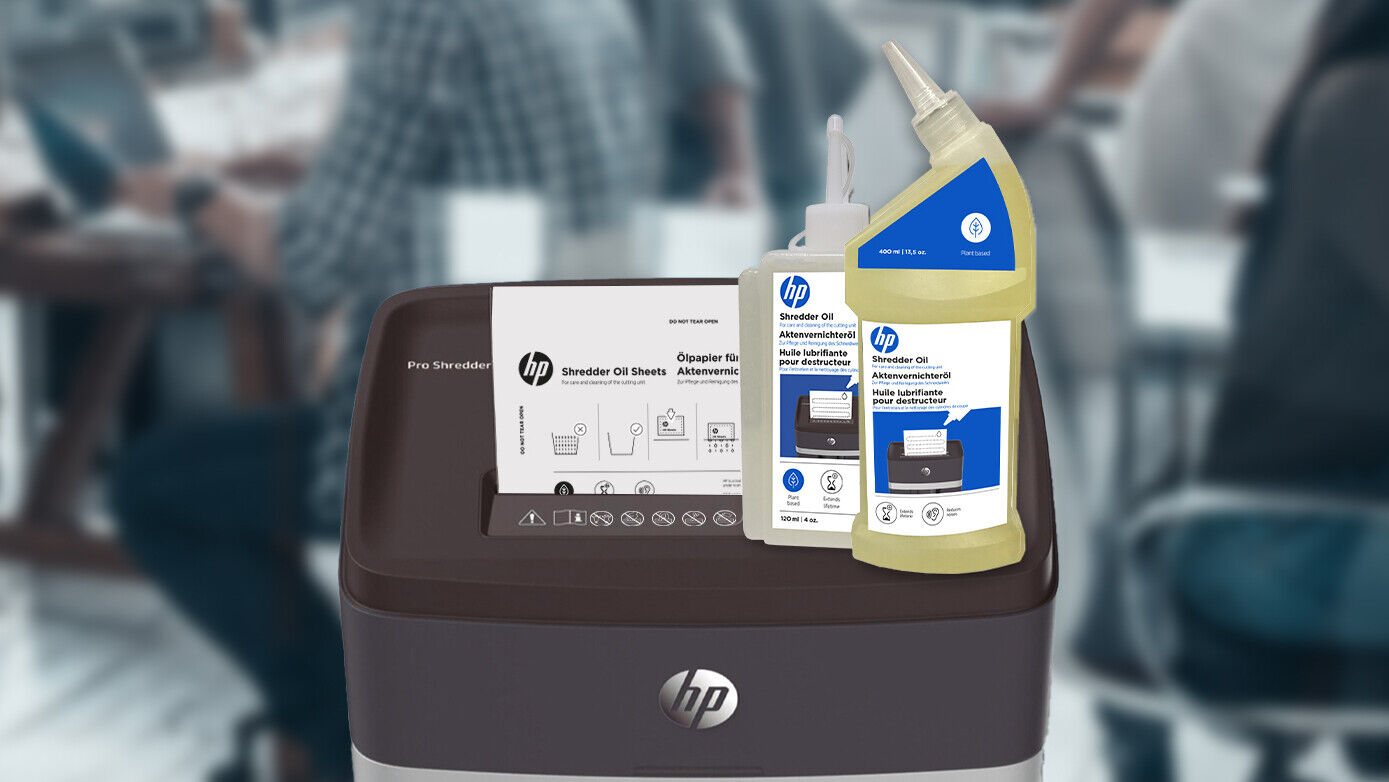
Convenient and mess-free, these sheets offer a simple alternative with some trade-offs.
How to Use Them
- Insert a pre-lubricated sheet into the manual feed slot
- Never use these sheets in an auto-feed tray
- Let the machine shred the entire sheet completely
Pros and Cons
- Easy and clean application with no measuring required
- More expensive per use than bottled oil
- Uneven oil distribution is possible with lower-quality sheets
- May leave residue if sheet quality is poor
Clean Sensors While Oiling
Oiling serves dual purposes: lubrication and cleaning critical components.
Fix Sensor Issues
If your shredder turns on randomly, won’t stop after shredding, or reacts to room lights, dust is likely blocking the auto-start/stop sensors. The oil’s viscosity helps dissolve and flush away this buildup during regular maintenance.
Dual Benefit of Oiling
As oil penetrates blade gaps, it loosens compacted paper fibers, reduces friction and heat, restores sensor sensitivity, and improves overall responsiveness. No separate sensor cleaning is needed if you oil regularly.
Troubleshoot Common Shredder Problems
Use this quick reference when performance drops.
Shredder Runs Slow
Cause is dust buildup increasing friction. Fix by oiling immediately using the indirect method, running a reverse cycle, then flushing with clean sheets.
Excessive Noise During Use
Cause is metal-on-metal contact from dry blades. Fix by applying oil directly or via paper, and check for stuck debris before oiling.
Frequent Paper Jams
Cause is sticky residue or insufficient lubrication. Fix by oiling the blades, then running in reverse to clear jams, and avoid overloading afterward.
Motor Overheating
Cause is prolonged friction from lack of oil. Fix by stopping use, letting it cool for 30 minutes, then oiling thoroughly before resuming light use.
Shredder Starts Automatically
Cause is dust-covered sensors triggering false signals. Fix by performing a full oiling cycle to clean sensors, or gently wipe the sensor area if accessible.
Maintain Built-In Oil Systems
Some high-end models have automatic lubrication that still requires monitoring.
How Auto-Oilers Work
Internal reservoirs release oil based on usage time or sheet count, reducing manual maintenance needs.
Still Requires Monitoring
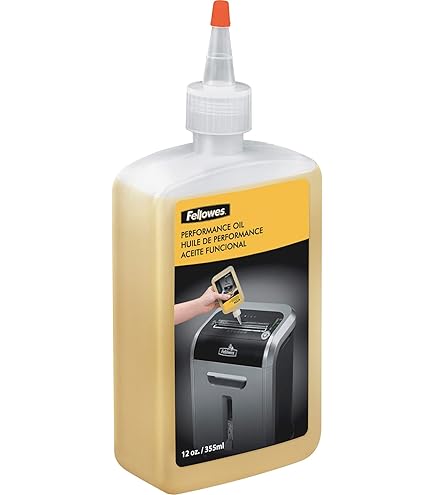
Even with auto-oiling, check performance regularly and manually oil if speed drops or noise increases. Refill the reservoir as needed, such as with Fellowes 3505801 32 oz refill.
Prevent Long-Term Damage
Proper habits prevent avoidable failures and extend your shredder’s life.
Avoid Dry Running
Never run a shredder continuously without oil. Modern cross-cut and micro-cut models rely on lubrication to handle fine paper particles.
Store Properly
Keep your shredder in a dry environment, dust-free area, and temperature-stable location. Humidity and dirt accelerate wear even when not in use.
Never Skip Regular Oiling
Some users claim their old shredders lasted years without oil, especially heavy-duty CD-capable models. But this is the exception, not the rule. Modern units are not built to withstand dry operation, and proactive oiling is the only way to ensure longevity.
Frequently Asked Questions About Oiling a Paper Shredder
What happens if I never oil my paper shredder?
Without regular oiling, paper dust accumulates between blades, causing increased friction, slower performance, frequent jams, motor overheating, and eventually permanent damage that may require replacement.
Can I use WD-40 on my paper shredder?
No. WD-40 is a degreaser, not a lubricant. It leaves behind sticky residue that traps dust and clogs blades, causing more harm than good.
How do I know when my shredder needs oiling?
Watch for slower shredding speeds, unusual grinding or loud noises, frequent paper jams, motor hesitation when feeding paper, or erratic sensor behavior. These are all signs that lubrication is needed.
Is it okay to use cooking oil as a substitute?
No. Cooking oils like vegetable or olive oil oxidize over time, turning gummy and attracting debris. This causes severe buildup and can damage the motor.
How long does the oiling process take?
The entire oiling process takes less than five minutes including applying oil, running the machine in reverse, and flushing with clean sheets.
Can I use pre-oiled sheets instead of bottled oil?
Yes, pre-oiled sheets are convenient and mess-free, though they are more expensive per use and may not distribute oil as evenly. They work best for occasional users who value simplicity.
Key Takeaways for Oiling Your Paper Shredder
Regular oiling is essential for maintaining shredder performance and extending machine life. Always use approved lubricants like dedicated shredder oil, mineral oil, sewing machine oil, or hair clipper oil, and never use WD-40, cooking oils, or aerosol sprays. Oil your shredder every time you empty the bin or at least every two months for light use, using the indirect paper method for safest and most even distribution. After oiling, always flush with 2 to 3 clean sheets to prevent excess oil from dripping onto documents. Make oiling part of your regular maintenance routine, just like emptying the bin, and your shredder will run quietly, efficiently, and reliably for years to come.