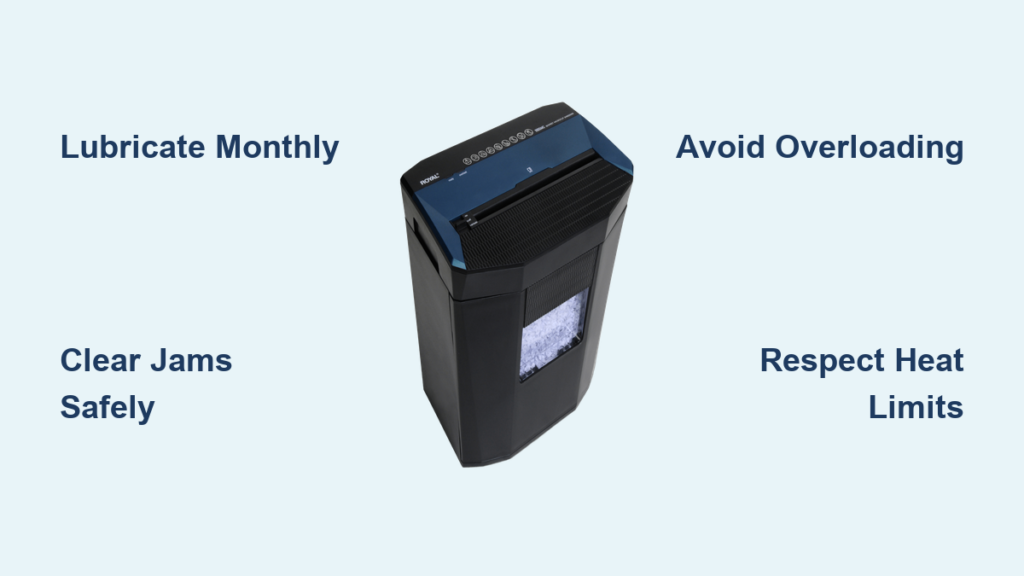

If your paper shredder suddenly sounds like a coffee grinder or jams on a single sheet, the blades are probably starving for lubrication. Paper shredder oil is a precision-engineered fluid, not a generic lubricant. It is built to cling to vertical metal blades, resist heat from high-speed cutting, and stay clean enough to repel paper dust instead of trapping it. Grabbing a bottle of olive oil or a can of WD-40 can permanently gum up the cutting head, void your warranty, and in some cases create a fire risk around the motor.
This guide breaks down the actual ingredients and properties inside paper shredder oil, explains why every common substitute fails, and shows you exactly how to lubricate your machine for maximum lifespan.
Why Common Oil Substitutes Destroy Shredders

Most household oils are formulated for kitchens, sewing machines, or engines. None of them match the unique demands of a shredder’s cutting head: high speed, vertical orientation, fine dust, and constant heat.
Vegetable Oils Harden Into Glue
Olive, canola, and corn oil are loaded with unsaturated fats that oxidize quickly when exposed to air and friction heat. The oil thickens, gels, and turns into a sticky tar that bonds paper dust into a cement-like blockage. Once this residue sets inside the cutter block, removing it usually requires professional disassembly, if the motor survives at all.
Baby Oil and Mineral Oil Drip Right Off
Baby oil is a light petroleum distillate that is far too thin to cling to vertical blades. It runs straight into the waste bin, attracts paper dust, degrades rubber seals, and adds unnecessary flammability near the motor.
WD-40 Is a Solvent, Not a Lubricant
WD-40 is designed to displace moisture and evaporate. It leaves almost no lasting lubrication and carries flammable propellants that pose a real fire hazard around electric motors. Its solvent base can also crack plastic gears and housings.
Sewing Machine Oil Cannot Handle the Heat
Sewing oil is too thin to cling to shredder blades and lacks the thermal stability to survive prolonged friction. It burns off quickly and offers no protection against dust buildup.
Motor Oil Is Too Thick
Motor oil contains detergents and anti-foaming additives meant for engines, not precision cutters. Its high viscosity creates drag on shredder blades, slowing them down and generating excess heat.
What Paper Shredder Oil Is Actually Made Of
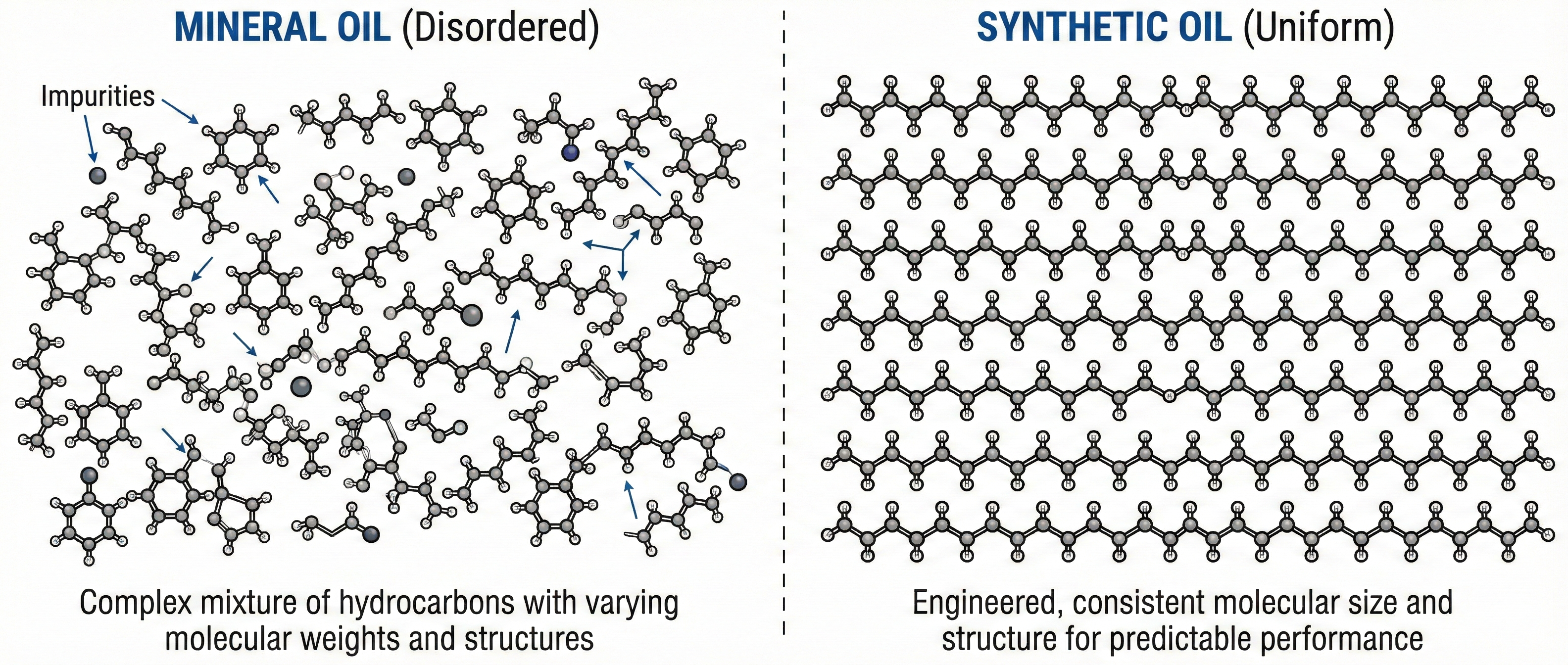
Manufacturers keep their formulas proprietary, but every effective shredder oil shares a defined set of performance characteristics. These traits reveal exactly what the fluid must contain.
High-Viscosity Synthetic Base
The foundation is a high-viscosity synthetic fluid engineered to stick to blades without dripping into the bin. It must also flow easily enough to penetrate the microscopic gaps between interlocking cutters, coating every metal surface with a protective film.
Non-Drying, Residue-Free Formula
Unlike vegetable oils that polymerize into varnish, genuine shredder oil never hardens, crystallizes, or turns gummy. It stays fluid for the long term, which keeps paper dust from sticking and allows particles to pass through the mechanism cleanly.
Thermally Stable Additives
Cross-cut and micro-cut shredders generate serious heat. Quality shredder oil resists breakdown at elevated temperatures and maintains its lubricity during extended runs, preventing thermal overload shutdowns.
Non-Corrosive and Material-Safe Composition
The formula is non-corrosive to hardened steel blades and safe for plastic gears, rubber seals, and housing materials. Many brands also formulate their oil to be non-toxic and free of CFCs for better indoor air quality.
Dust-Repellent Chemistry
A defining trait is that the oil does not attract paper dust. Instead of binding particles into clumps, it lets dust slide off or pass through, which is critical for preventing the cement-like packing that seizes cutting heads.
Approved Shredder Oils Worth Buying
Only use lubricants specifically designed for shredders. These four brands lead the market in performance and safety.
Fellowes Powershred Oil
A squeeze bottle with an extended nozzle for precise application across the feed throat. It is residue-free, conditions cutters, and is ideal for home and small office machines.
GBC Swingline Shredder Oil
A synthetic blend compatible with Swingline and most major brands. It reduces motor torque, prevents jams, and works well for medium-volume environments.
MBM DestroyIt Shredder Oil
A high-cling, non-detergent formula built for tight-tolerance industrial cutters. Available in sizes from 1 pint to 4 gallons for high-volume operations.
HSM Shredder Oil
Tested to meet strict high-security shredder standards for P-4 and P-5 machines. Available in manual and auto-oiler compatible formulations, making it the top choice for classified document destruction.
Oil Sheets: A Cleaner Alternative
For anyone who dislikes squeeze bottles, pre-oiled paper sheets offer a mess-free solution with consistent dosing.
How Oil Sheets Work
You feed a pre-impregnated sheet through the shredder like normal paper. As the cutters slice through it, oil is released and distributed evenly across the blade assembly. No measuring, no spills.
Benefits of Oil Sheets
- Consistent dosing with no risk of over-oiling
- Quick shred-and-go maintenance
- Many brands use recycled, biodegradable paper
- Some formulas include dust-control agents
Recommended Brands and Usage
Fellowes, HSM, and Amazon Basics sell packs ranging from 12 to 50 sheets. A good rule of thumb is one sheet every one to two bin empties, depending on how heavily you use the machine.
Automatic Oiling Systems for High-Volume Use
Commercial and high-security shredders often include built-in oiling systems that handle lubrication without manual effort.
How Automatic Oilers Function
An internal reservoir holds shredder-specific oil and dispenses it automatically during operation. Some systems can be programmed to oil after a set number of sheets or a specific time interval.
Maintenance Tips for Auto Oilers
- Refill only with manufacturer-approved oil such as HSM Auto Oiler Lubricant
- Never use generic oils, which can clog the dispenser
- Check the reservoir weekly in heavy-use environments
How to Oil a Shredder the Right Way
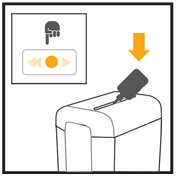
Correct technique matters as much as the oil you choose. Follow these steps for even coverage and long blade life.
Step 1: Power Down for Safety
Always unplug the shredder before applying liquid oil. This prevents accidental activation and protects you from electrical hazards.
Step 2: Apply the Oil
For direct application, hold the squeeze bottle above the paper entry slot and squeeze a slow, steady stream across the full width of the opening for 1 to 2 seconds. For the sheet method, lay a blank sheet flat and apply oil in an X or S pattern, then feed it through immediately.
Step 3: Distribute the Lubricant
Plug the shredder back in and run it in Reverse for 10 to 15 seconds. This pulls oil deep into the interlocking cutters and helps dislodge trapped dust. If your model lacks reverse, run it in Forward mode for the same duration.
Step 4: Remove Excess Oil
Feed 2 to 3 dry sheets of plain paper through the shredder. These absorb surplus oil and prevent drips into the waste bin.
How Often You Should Oil Your Shredder
Oiling frequency depends on your shredder type and usage volume.
Cross-Cut Shredders
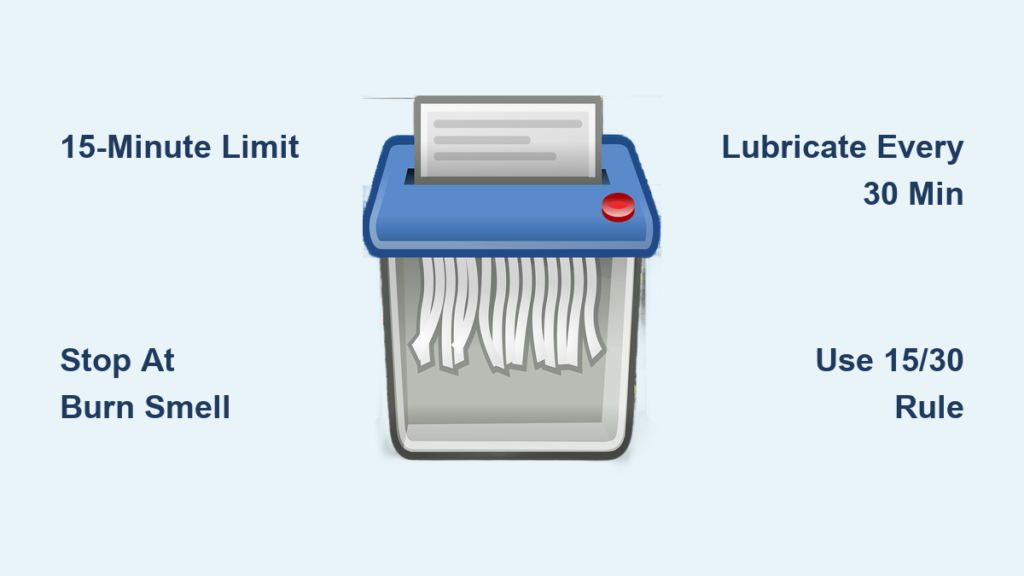
Oil every time you empty the bin, or roughly every 30 minutes of continuous use. The higher blade count creates more friction.
Micro-Cut Shredders
Oil every 15 to 20 minutes of continuous use. These high-security machines have extremely tight tolerances that demand constant lubrication.
Strip-Cut Shredders
Oil once a week for light home use, or every hour of continuous operation. Fewer blades mean less frequent oiling.
Light Home Use
If you only shred 1 to 2 hours per week, oiling once every two weeks is usually enough. Watch for increased noise or resistance as signs that the blades need attention.
Why Proper Lubrication Prevents Jams
Oil does far more than keep things quiet. It is the primary defense against the most common shredder failure: paper dust buildup.
Dust Slides Off Instead of Sticking
Paper dust is unavoidable, but oiled blades repel it. Without that protective film, dust accumulates into dense clumps that clog the cutter block.
Blades Stay Sharp Longer
Oil reduces microscopic wear on cutting edges. Sharp blades produce clean cuts, maintain security ratings, and drastically reduce jam risk.
Motors Run Cooler and Last Longer
Less friction means less heat. This prevents thermal overload shutdowns and extends the life of the motor and electrical components.
The Real Cost of Using the Wrong Oil
The consequences of skipping proper lubrication add up fast.
Warranty Gets Voided
Most manufacturers explicitly state that damage from non-approved oils is not covered. A single bottle of olive oil can void an entire machine warranty.
Permanent Cutter Block Damage
Gummy residue from improper oils can cement blades together. Repair often requires full cutter replacement, which frequently costs more than the shredder itself.
Fire Hazard
Flammable aerosol sprays and petroleum-based oils introduce genuine ignition risks near electric motors, especially during extended use.
Higher Energy Bills
Unlubricated motors work harder and draw more power. Over time, this drives up electricity costs and shortens motor lifespan.
Eco-Friendly Standards to Look For
Modern shredder oils are increasingly designed with sustainability in mind.
Non-CFC and Low-Toxicity Formulas
Many reputable brands now use CFC-free ingredients, which improves indoor air quality and reduces environmental impact.
Biodegradable Oil Sheets
Some oil sheets are made from recycled paper and biodegradable oils, making them ideal for green offices and ESG-focused workplaces.
Labels That Signal Quality
Look for products marked non-toxic, CFC-free, biodegradable, and safe for plastics and rubber.
Maintenance Kits for Complete Care
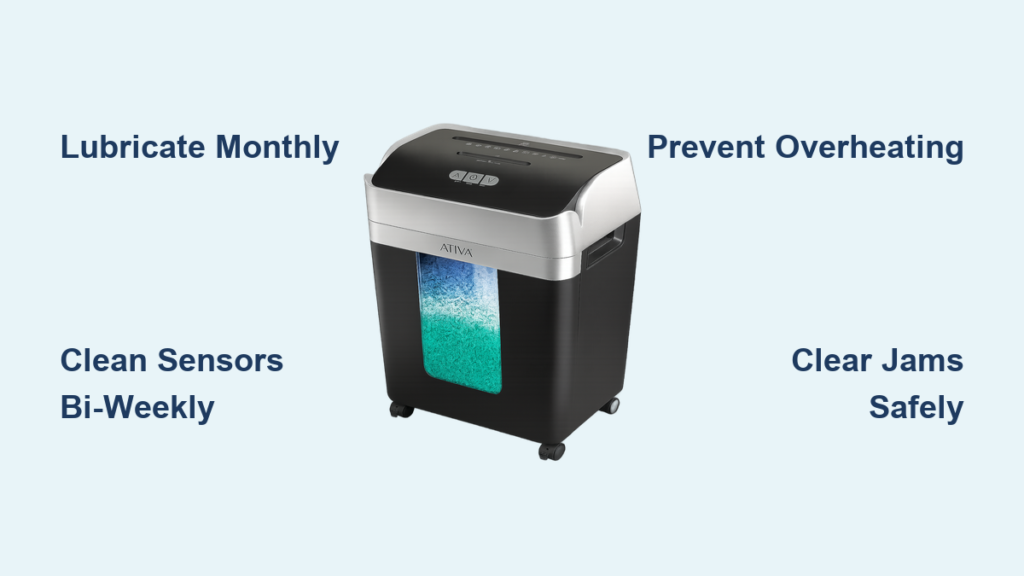
For thorough shredder care, consider a maintenance kit that bundles the essentials.
What a Good Kit Includes
- Shredder oil in liquid or sheet form
- Compressed air duster with straw attachment for clearing dust
- Cleaning wipes for external surfaces
- Replacement bags for dust-free disposal
Pro Tip: Always Clean Before You Oil
Empty the bin, then use compressed air to blow dust out of the feed throat before applying oil. This ensures the lubricant reaches bare metal instead of mixing with dry dust.
Frequently Asked Questions About Paper Shredder Oil
Can I use olive oil in my paper shredder?
No. Olive oil and other vegetable oils oxidize quickly under heat, turning into a sticky residue that traps paper dust and permanently damages the cutting head.
Is WD-40 safe for shredders?
No. WD-40 is a solvent that evaporates rapidly, leaving blades dry. Its flammable propellants also create a fire risk near electric motors.
What ingredients make shredder oil different from regular oil?
Shredder oil uses a high-viscosity synthetic base with thermal stabilizers and dust-repellent additives. It is non-drying, non-corrosive, and engineered to cling to vertical blades without dripping.
How do I know which shredder oil to buy?
Choose a brand that matches your shredder manufacturer when possible. Fellowes, GBC Swingline, MBM DestroyIt, and HSM all make approved oils for home, office, and high-security machines.
Are oil sheets as effective as liquid oil?
Yes. Oil sheets deliver a pre-measured dose that distributes evenly as the sheet is shredded. They are ideal for users who want mess-free maintenance.
Can the wrong oil void my warranty?
Yes. Most manufacturers explicitly state that damage caused by non-approved lubricants, including vegetable oil and WD-40, voids the warranty.
Key Takeaways for Choosing the Right Shredder Oil
Paper shredder oil is a precision product built around four essential traits: high viscosity for blade adhesion, thermal stability for heat resistance, a non-drying formula to prevent residue, and dust-repellent chemistry to keep cutters clean. Every common substitute, from cooking oil to WD-40, fails on at least one of these points and risks permanent damage.
Use only manufacturer-approved liquid oil or pre-oiled sheets, match your oiling frequency to your shredder type, and always clean dust out before lubricating. A $10 bottle of shredder oil routinely prevents $100 or more in repair costs and can double the working life of your machine. Pick the right product, apply it on schedule, and your shredder will run quieter, faster, and far longer.